

Table of Contents
- Understanding Hard Water
- How Water Softeners Work
- Benefits of Installing a Water Softener
- Choosing the Right Water Softener
- Installation and Maintenance
- Conclusion
Hard water is an invisible challenge that households throughout the US face every day. Persistent issues such as spotty dishes, stiff laundry, and dry, irritated skin can often be traced back to the mineral content in your tap water. By installing whole home water softener systems in Vernal Utah, homeowners can significantly improve both water quality and their day-to-day living experience.
Addressing hard water problems yields immediate improvements in comfort and cleanliness while helping to preserve the condition of appliances and plumbing. For families and individuals alike, investing in a water softener is about more than just aesthetics; it is about creating a healthier, more efficient home.
While some mineral content is normal, hard water, typically characterized by high levels of calcium and magnesium, can cause lasting complications if left untreated. Here, we explore the science of hard water, how water softeners work, and the numerous benefits they offer modern households.
Understanding the differences between water softener types, selecting, installing, and maintaining the right system can make all the difference in transforming your home’s quality of life. With the proper system and care, families can enjoy cleaner water and longer-lasting appliances.
Understanding Hard Water
Hard water contains elevated levels of minerals, especially calcium and magnesium. Although they are not dangerous to human health, these minerals can build up in plumbing and appliances, causing a host of household issues. Signs of hard water commonly include:
- Dry and itchy skin, and an irritated scalp
- Hair that feels limp, brittle, or dull after washing
- Limescale deposits on faucets, fixtures, and glassware
- Spotty dishes and laundry that feels stiff or looks less bright
Over time, limescale can obstruct pipes, reduce appliance efficiency, and increase the need for costly repairs or replacements. According to the United States Geological Survey (USGS), more than 85% of American homes live with hard water to varying degrees.
How Water Softeners Work
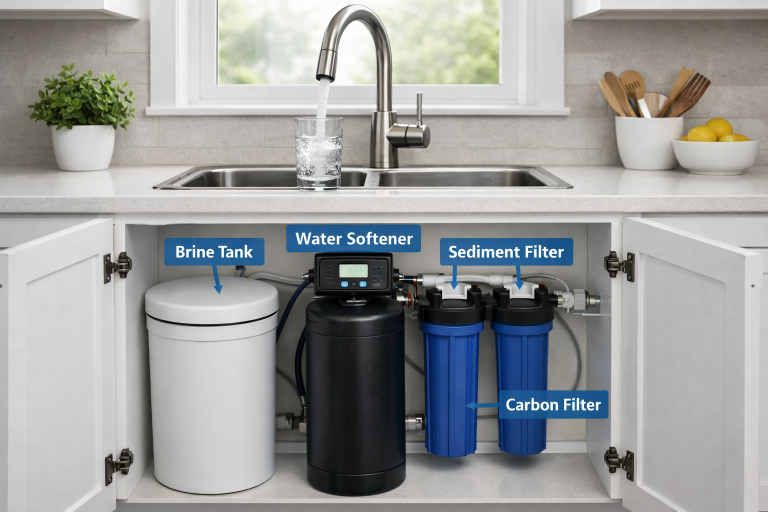
Water softeners use a process called ion exchange to remove unwanted minerals. In a standard salt-based system, hard water passes through a tank filled with resin beads. These beads are coated with sodium ions that attract and capture calcium and magnesium ions as water flows through, releasing sodium ions in their place. This softening action eliminates the causes of buildup and scaling, resulting in noticeably softer water for your entire home.
There are also alternatives to salt-based softeners, such as salt-free conditioners and reverse osmosis systems. Each option has its own advantages and best-use scenarios, based upon household size, water hardness, and personal preferences.
Benefits of Installing a Water Softener
The benefits of a water softener extend far beyond softer hair and cleaner dishes. Homeowners frequently notice:
- Improved Appliance Performance and Lifespan: Soft water reduces scale buildup in water heaters, washing machines, and dishwashers, helping prevent premature breakdowns and improve efficiency.
- Lower Cleaning Costs: You will need less soap, detergent, and other cleaning products, since soft water lathers better and rinses more effectively.
- Better Hygiene: Skin feels smoother and less irritated, while hair retains more natural oils and shine after each shower.
- Spot-Free Cleaning: Glassware, silverware, and tiles look cleaner, free of white spots or streaks caused by mineral residue.
- Reduced Energy Bills: Appliances running on soft water use less energy, as heating elements stay free of efficiency-robbing scale.
Homes with softened water also report fewer plumbing issues, as pipes remain clear of blockages. These combined advantages not only contribute to a more pleasant home environment but also offer real savings over time.
For more in-depth information on the impact of water hardness, the United States Environmental Protection Agency provides a comprehensive overview of drinking water standards and maintenance.
Choosing the Right Water Softener
Selecting the most appropriate system involves assessing your household’s water usage, local hardness level, available space, and budget. Water softener sizes are measured by grain capacity. Larger families and residents in areas with especially hard water may require more robust options.
Key points to consider when choosing a softener include system type (salt-based, salt-free, or magnetic), certification by industry standards, regeneration process (automatic vs. manual), and maintenance requirements. Consulting a trusted professional helps ensure your investment delivers reliable, long-term results.
Installation and Maintenance
Professional installation by a licensed plumber is strongly recommended to guarantee optimal performance and compliance with local regulations. Placement in an accessible area near the water main, ideally before the water heater, is standard.
Ongoing maintenance usually involves keeping the brine tank adequately filled with salt and conducting periodic system cleanings. Many modern systems feature indicators to alert you when service is needed, reducing the risk of unexpected downtime.
Schedule an annual checkup to inspect valves and test water hardness. Regular upkeep helps prevent issues, protect warranties, and ensure the softener functions efficiently for years.
Conclusion
Adding a water softener to your home is a powerful way to improve water quality, appliance longevity, and daily comfort. By understanding the causes and consequences of hard water, as well as the available solutions, you can make an informed decision to improve your living environment. With proper installation and maintenance, your home will enjoy cleaner water, brighter laundry, and a noticeable reduction in cleaning chores for years to come.

Reach out for business queries.
wayhubs@gmail.com