

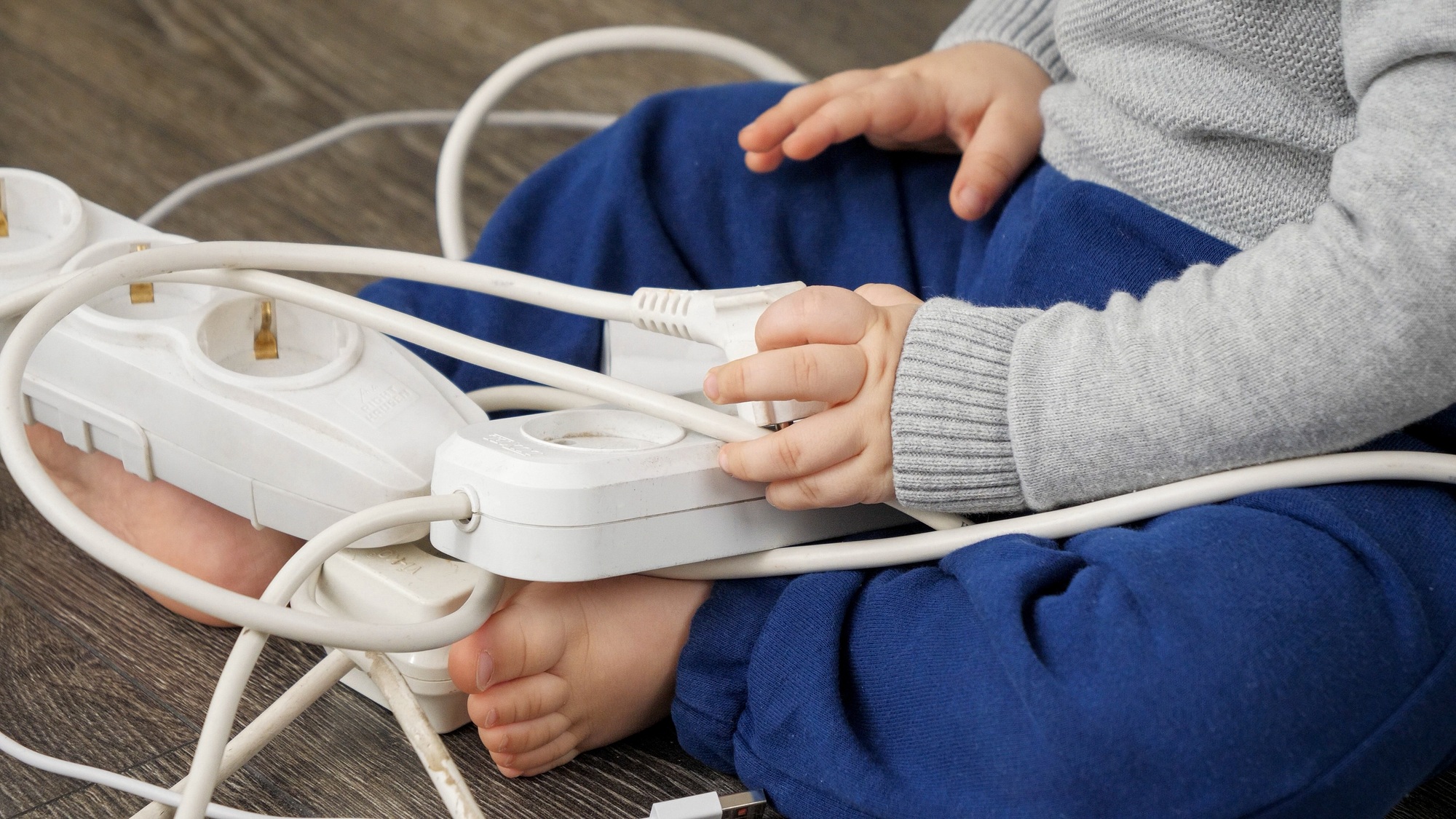
The illusion of safety often poses a greater threat than the hazard itself. Those plastic outlet caps you rely on? They’re choking hazards masquerading as protection. Real electrical safety isn’t about covering up risks. It’s about engineering them out through infrastructure upgrades like smart breakers and arc fault detection.
This guide skips the tired “tuck away cords” advice and focuses on the permanent solutions that genuinely prevent electrical shock and fire. Stop childproofing. Start reinforcing your home’s electrical foundation.
Use Injury Data To Prioritize Rooms
Each year, approximately 2,400 children suffer severe shock and burns when they stick items into electrical receptacles. You can’t protect every corner simultaneously. Focus your resources where accidents actually occur.
The Hairpin Problem
Nearly one-third of electrical receptacle injuries happen when children insert household objects like hairpins, keys, or paperclips into outlets. Children aged 2-3 represent 50% of these incidents, making them the highest-risk group. This demographic isn’t randomly exploring. They’re mimicking you. If they watch you style hair in the bathroom, those outlets become prime targets.
Living Rooms Over Nurseries
Most parents obsess over the nursery and ignore the living room. That’s backwards. About 4,000 injuries associated with extension cords are treated in hospital emergency rooms annually, with half involving fractures, lacerations, or sprains from tripping. Prioritize the living room for cord management and the bathroom for shock protection before you worry about low-traffic guest bedrooms.
Upgrade To Tamper Resistant Outlets
Tamper resistant receptacles were first required by the 2008 edition of the National Electrical Code. If your home predates that, your outlets are dangerously outdated. Here’s why plastic caps fail and TR outlets succeed:
- The 10-Second Failure: Studies by Temple University found that 100% of children aged 2-4 could remove one type of plastic outlet cap within 10 seconds. That’s faster than you can finish pouring coffee.
- Internal Shutter Mechanism: TR outlets use spring-loaded receptacle cover plates that only open when equal pressure is applied simultaneously to both sides, allowing standard plugs to make contact.
- Permanent Protection: Unlike caps that you must remember to replace, TR outlets provide this resource of continuous protection without user intervention. No batteries, no maintenance, no human error.
- Minimal Cost: The cost of installing a TRR in newly constructed homes is only about 50 cents more than traditional receptacles, while retrofitting existing homes costs as little as $2 per outlet.
Stop relying on removable plastic pieces that become dog toys. Swap your hardware for engineered safety that works while you sleep.
Add GFCI Protection Near Water
Water and electricity create lethal combinations. Standard breakers protect your wiring, not your children. You need Ground Fault Circuit Interrupters.
The Millisecond Response
A standard breaker trips at 15 or 20 amps to prevent wire damage. It doesn’t care if that current flows through your child’s body. A GFCI constantly monitors the balance of current leaving and returning. If it detects a variance of just 4 to 6 milliamps, it cuts power in as little as 1/40th of a second. This speed prevents a lethal electrical dose from stopping a heart.
Required Locations
The NEC requires GFCI protection in bathrooms, kitchens, laundry rooms, garages, and outdoor areas. Older homes often lack this coverage. You don’t always need to replace every outlet. Installing a single GFCI receptacle at the circuit’s origin can protect every downstream outlet, saving both time and money.
Add AFCI Breakers To Prevent Fires
GFCIs prevent shock. Arc Fault Circuit Interrupters prevent fires. This distinction matters because they address completely different threats.
Detecting Invisible Danger
An electrical arc from a nail piercing a wire or a frayed cord behind furniture can generate temperatures exceeding 10,000 degrees Fahrenheit. Standard breakers ignore these arcs because the current stays below the trip threshold. AFCI breakers contain microprocessors that analyze electrical waveforms, distinguishing between normal sparking from vacuum motors and dangerous arcing from damaged wiring.
Bedroom Requirements
AFCI protection has been required for bedroom branch circuits since January 1, 2002. This matters because bedding and curtains are highly flammable. If your electrical panel lacks these breakers, you’re relying on decades-old thermal technology to detect complex electronic faults. That’s a gamble you shouldn’t take.
Replace Frayed Cords, Skip Tape
There’s a dangerous myth that electrical tape fixes damaged cords. For homes with children, this belief is absolutely wrong. You must replace, never repair. Here’s what actually happens with taped cords:
- Structural Integrity Loss: Tape conceals damage but doesn’t restore the jacket’s tensile strength. A child pulling on a taped cord easily exposes live wires beneath the wrap.
- Adhesive Failure: Current-generated heat degrades tape adhesive over time. The tape unravels, creating sticky surfaces that attract curious fingers and become choking hazards.
- Insulation Rating Mismatch: Consumer-grade electrical tape rarely matches the original cord jacket’s insulation rating. This creates weak points for heat buildup and potential shock.
- The Replacement Rule: If you can see inner wires through the outer jacket, discard the cord immediately. No exceptions, no “just one more month.”
A replacement cable costs $15. A house fire costs everything. Never let convenience compromise electrical safety in your home.
Hide And Shorten Loose Cords
Long cords create both trip and strangulation risks. More than 200 incidents involving children up to 8 years old occurred due to cord strangulation hazards during a 13-year period.
Raceways Over Staples
Never use metal staples to secure cords to baseboards. A misfired staple pierces insulation, causing arc faults or energizing the staple itself. Use rigid plastic raceways that adhere to walls instead. These cord concealers fully encapsulate cables, preventing children from chewing on them or pulling them loose.
Proper Shortening Methods
Use cord shorteners or cable organizers to wind excess length. Don’t leave wire coils behind furniture where dust accumulates. Zip ties become choking hazards when cut and left scattered. Velcro straps offer safer, reusable alternatives for bundling cables behind entertainment centers and computer desks.
Install Smart Breakers For Lockouts
The future of electrical safety is digital control. Modern smart panels and breakers let you manage power flow to specific circuits directly from your smartphone, creating layers of protection impossible with traditional systems.
Remote Circuit Control
Imagine turning off power to the outlet powering a dangerous space heater without entering the room. Brands like Leviton and Siemens now offer load centers where you can lock out circuits via mobile apps, rendering outlets completely dead. This gives parents unprecedented control over which devices children can access.
Real-Time Monitoring
Smart breakers provide continuous energy monitoring. If a circuit in the kids’ room suddenly draws unusual power, you receive instant notifications. This early warning system alerts you to space heaters left on under clothing piles long before smoke detectors trigger, potentially preventing fires before they start.
Link Matter Devices For Auto Shutoff
You don’t need complete panel upgrades for smart safety features. The Matter smart home protocol allows different devices to communicate and prevent accidents through automation. These systems work together to eliminate human error from your safety equation:
- Geofencing Routines: Configure your smart hub to cut power to smart plugs connected to curling irons or space heaters when your phone leaves your property boundary. Forgot to unplug? The system remembers.
- Motion-Based Cutoffs: Use motion sensors in reverse mode. If the playroom shows no movement for 30 minutes, automatically turn off the power strip feeding electronic toys.
- Voice Control Lockout: Deploy smart plugs disabled via voice command. If your toddler approaches a fan, kill the power instantly by speaking to your home assistant.
- High-Load Alerts: Smart plugs monitor current draw continuously. Set automations to shut down devices when amp draw exceeds safe limits for specific appliances, preventing overload fires.
Automation ensures dangerous devices power off even when you forget. It’s the safety net for the moments when life gets chaotic.
Claim Insurance Discounts With Upgrades
Electrical upgrades carry upfront costs, but they often pay for themselves through reduced insurance premiums. Insurers reward verified risk mitigation with lower rates.
The 4-Point Inspection
Insurance carriers often require 4-point inspections for older homes, examining HVAC, roofing, plumbing, and electrical systems. Upgrading from a fuse box to a breaker panel or replacing known fire-risk panels like old Federal Pacific models can significantly drop your premiums. Some homeowners see reductions of 10 to 20 percent.
Documenting Your Improvements
When you install smart water leak detectors or whole-home surge protectors, send installation proof to your insurance agent immediately. Discounts vary by state and carrier, but verified electrical infrastructure updates remain among the few reliable methods to forcefully lower homeowner insurance rates in today’s market.
Book A Licensed Electrical Check
DIY inspections have hard limits. You can’t see inside walls or measure torque on breaker lugs. Professional audits reveal hidden dangers that visual checks miss completely:
- Thermal Imaging: Request thermographic inspections that reveal hot spots inside walls or panels where loose connections generate dangerous heat invisible to naked eyes. These scans detect problems months before they become fires.
- Torque Confirmation: Vibrations and thermal expansion loosen wire connections gradually over time. Licensed electricians re-torque main breakers to manufacturer specifications, ensuring proper contact and preventing arcing.
- Grounding Verification: Professionals verify that your grounding rod actually functions properly. In many older homes, ground wires have corroded away entirely, leaving systems dangerously unprotected.
- Smoke and CO Interconnection: Electricians ensure smoke detectors are hardwired and interconnected properly. If one alarm in the basement triggers, the nursery alarm sounds immediately, giving you precious extra seconds.
Treat your electrical system like your car’s brakes. Regular professional maintenance isn’t optional luxury. It’s the barrier between your family and catastrophe.
Conclusion: Engineer Safety Into Your Home
Childproofing isn’t a one-time shopping trip. It’s an ongoing process combining maintenance, upgrades, and behavioral changes. By focusing on the physics of electricity rather than just covering outlets, you create homes that are passively safe.
Arc faults, ground faults, and resistance aren’t abstract concepts. They’re the mechanisms that kill and injure. Don’t wait for a spark to reveal your system’s age. Take control of your electrical grid today and build safety into your home’s foundation.
Sources and Verifications
- Electrical Safety Foundation International, February 20, 2025, https://www.esfi.org/childproofing-your-home-tamper-resistant-receptacles/
- Electrical Safety Foundation International, April 10, 2025, https://www.esfi.org/program/tamper-resistant-receptacles-trrs/
- 4ABC Electrical, December 28, 2024, https://www.4abc.com/blog/protecting-children-from-electric-outlet-shock-in-the-home/
- U.S. Consumer Product Safety Commission (CPSC), Extension Cords Fact Sheet, https://nps.edu/documents/111291366/111353812/ExtensionCordsFactSheet.pdf
- Right Touch Electrical, August 5, 2025, https://www.righttouchelectrical.com/electrical-services/fuse-circuit-breaker-replacement-houston-tx/where-are-arc-fault-circuit-breakers-required/
- Wikipedia, Arc-fault circuit interrupter (last edited 2 weeks ago), https://en.wikipedia.org/wiki/Arc-fault_circuit_interrupter
- CPSC News Release, Nearly Half of Incidents with Kids and Corded Window Coverings Resulted in Death, https://www.cpsc.gov/Newsroom/News-Releases/2023/Nearly-Half-of-Incidents-with-Kids-and-Corded-Window-Coverings-Resulted-in-Death-GoCordless-to-Save-Lives

Reach out for business queries.