

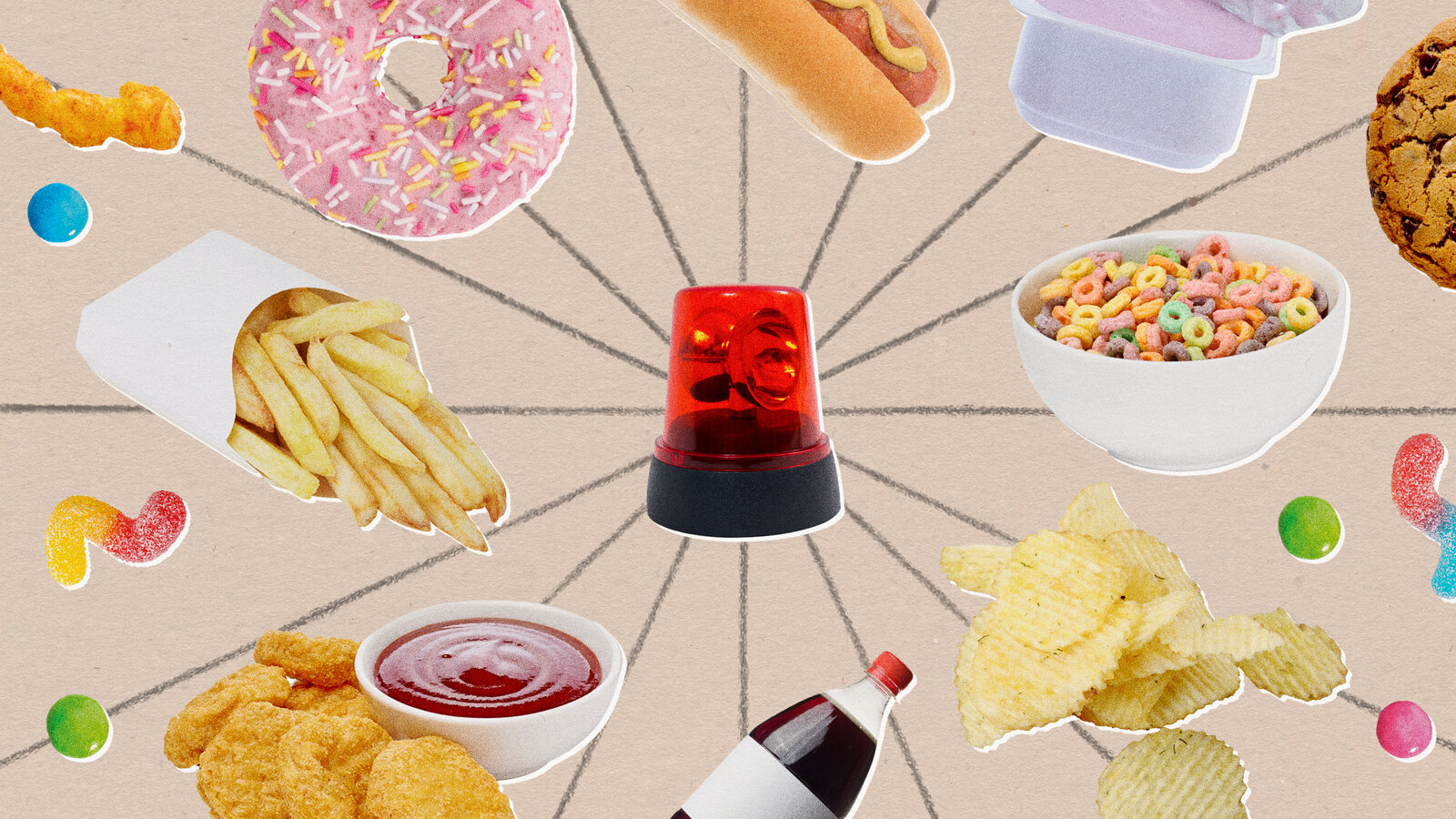
You know that weird moment where you finish a bag of chips and think, “Wait, did I even taste that?” That’s not you being “bad” at eating. It’s often the food design plus the context you’re eating in.
Ultra-processed foods tend to be easy to chew, quick to swallow, and oddly hard to stop. And for once, we have more than opinions and hot takes. A tightly controlled NIH inpatient trial tested this head-on and saw a clear pattern: people ate more calories and gained weight on an ultra-processed diet than on an unprocessed diet, even though the meals were built to look nutritionally similar on paper.
What the NIH inpatient trial actually did (and why it matters)
A rare “closed system” feeding study
Most nutrition research has a problem: real life. People forget what they ate, they snack, they underestimate portions, they “start Monday,” and then Monday becomes… next Monday.
This study avoided that mess by doing something uncommon. Researchers brought 20 adults into the NIH Clinical Center for a full month, gave them all their food, and tracked what happened when they could eat as much or as little as they wanted. It was a randomized crossover design: each person ate an ultra-processed diet for two weeks and an unprocessed diet for two weeks, in random order.
That setup matters because it makes the comparison cleaner. Same people. Same setting. Same basic routine. The big change was the level of processing.
How they matched the diets (and what “matched” really means)
Here’s the part that trips people up. The meals were designed to be broadly matched for things like presented calories and key nutrients, including macronutrients, sugar, sodium, and fiber.
But “matched” does not mean identical in every detail. In the full paper, the authors note that some ratios still differed, like the proportion of added sugar, the type of fiber, and the mix of fats.
So yes, nutrients were similar enough to make a fair test. But the foods still behaved differently once they hit a human mouth, gut, and brain. That’s kind of the point.
The headline result: more calories and more weight, same people
About 500 extra calories a day adds up fast
During the ultra-processed phase, participants ate about 508 more calories per day on average.
In the NIH write-up, they summarize it the simple way: about 500 extra calories a day, plus weight gain during the ultra-processed diet and weight loss during the unprocessed diet.
And the weight shift wasn’t subtle. Participants gained about 0.9 kg (around 2 pounds) on the ultra-processed diet and lost about the same amount on the unprocessed diet over those two-week periods.
It wasn’t that they “liked” the meals more
This is the sneaky part. If you assume ultra-processed foods “win” because they taste better, you’d expect people to report higher pleasure or stronger hunger.
In the paper, appetite and pleasantness ratings were not meaningfully different between the diets, yet calorie intake still climbed on the ultra-processed phase.
So the story is not “people were weak around yummy food.” It’s more like “the system nudged them to eat faster and more before their body caught up.”
So why did people eat more without noticing?
Speed, softness, and calories per bite
One of the strongest clues was eating rate. Participants ate faster on the ultra-processed diet.
That matters because your fullness signals have a delay. Your gut hormones, stomach stretch, and brain satiety circuits do not send an instant “stop” notification the moment calories hit your mouth. If you eat quickly, you can stack a lot of calories before the “i’m good” signal lands.
Think of it like sending a message in a work chat and assuming it’s been read. It hasn’t. There’s lag. Ultra-processed foods often exploit that lag because they are engineered to be easy to eat. Less chewing. Less friction. More speed.
There’s also the “calories per bite” issue. In the study’s diet breakdown, the non-beverage energy density was much higher on the ultra-processed diet than on the unprocessed diet.
Higher energy density means you can eat a normal-looking amount and still rack up more calories.
The food matrix, fiber structure, and the “missing workload” effect
Here’s a mild contradiction that’s actually true: ultra-processed foods can be “matched” for fiber grams, yet still act like they have less fiber.
Why? Fiber is not just a number. It’s structure. In many unprocessed foods, fiber is part of the plant’s cell walls. It slows chewing, slows digestion, and changes how nutrients get released. In ultra-processed foods, fiber often gets added back in as an ingredient, but the original structure is gone.
The NIH paper also notes that some aspects still differed despite the matching attempt, like insoluble-to-total fiber ratios and added sugar proportions.
So the workload changes. With unprocessed foods, your body has to do more mechanical and digestive work. With ultra-processed foods, a lot of that work is “pre-done” by the factory. Convenient, yes. But it can also make it easier to overshoot your needs.
And that’s how you end up eating more “without noticing.” Not because you’re clueless. Because the cues you rely on got quieter.
How this shows up in real life (even if you cook sometimes)
Passive overeating is a real thing
Most people do not eat ultra-processed foods because they’re trying to sabotage themselves. They eat them because they’re fast, cheap, shelf-stable, and everywhere. The NIH team even estimated ingredient costs and found the ultra-processed meals were cheaper than the unprocessed meals in their setup.
Real life adds extra pressure: long workdays, commuter time, decision fatigue, grocery prices, kids, deadlines, and the kind of low-grade stress that makes you want “easy food.” That’s not a moral failure. It’s logistics.
The tricky part is that ultra-processed foods can slide into your day in tiny ways:
- “Just” a flavored yogurt plus a granola bar.
- A frozen meal that goes down fast.
- A snack you eat while answering messages.
Each choice feels small. The pattern adds up.
When food starts to feel like a coping tool
Sometimes the line between “convenient” and “compulsive” gets blurry. If you notice you’re using food to numb out, to manage anxiety, or to get through the day, that’s worth taking seriously.
And if the bigger picture includes substance use or recovery in your life or your family, support matters even more. A professional team can help you untangle the overlap between stress eating, cravings, routine, sleep, and mental health. If you’re looking for structured care, a New Jersey addiction Treatment can be a starting point for getting real support and not trying to power through alone.
What to do with this info (without demonizing every packaged food)
A practical playbook that works on busy weeks
You do not need to throw out your pantry and live on kale. Also, not all processing is bad. Frozen veggies are processed. Yogurt is processed. Even bread is processed. The issue is “ultra-processed” patterns that make it easy to eat a lot, fast, and often.
Try these moves. They are boring, which is why they work.
- Slow the first five minutes. Put your fork down between bites. Chew fully. Give your brain time to catch up.
- Add friction to snack foods. Put chips in a bowl. Do not eat from the bag. Tiny step, big effect.
- Anchor meals with “real structure.” Something you can see as ingredients: eggs, beans, chicken, tofu, oats, fruit, veg, rice, potatoes.
- Watch the “liquid calories plus crunchy calories” combo. Sweet drinks plus salty snacks is a classic overeating loop.
- Upgrade one default meal. If lunch is always ultra-processed, swap it 2–3 days a week first. Not seven.
- Use the convenience aisle on purpose. Grab rotisserie chicken, bagged salad, frozen veg, plain Greek yogurt. Fast does not have to mean ultra-processed.
And yes, you can still eat cookies sometimes. The goal is not perfection. The goal is to stop getting nudged into overeating on autopilot.
Resource box: if food and substances overlap, support matters
If you’re reading this and thinking, “This sounds like my relationship with food, plus other stuff,” you’re not alone. Food reward and substance reward can overlap in the brain, and stress tends to push both buttons.
If you need a more structured reset and professional support, this Treatment Centers in Washington resource can help you explore options, especially if substance use is part of the picture.
The NIH trial doesn’t say ultra-processed foods are “evil.” It shows something more useful: when you change the type of food environment, people eat differently, even when they aren’t trying to.
So if you’ve been blaming yourself, pause. You’re not broken. You’re responding to a system that makes it easy to eat more than you meant to. And once you see that clearly, you can build a setup that works better for you.

Reach out for business queries.